Showing posts with label legal. Show all posts

Monday, September 19, 2011

A Property Lawyer’s View of Strata Title


Strata title is a form of real property so you’d think that it fits conventional notions of property law.  But it doesn’t. And, as strata title law continues to develop and get developed by the people using it, it diverges more and more from conventional property law.

But is this right?  Should it be more like property law?  Or should it be unique?

At the Griffith University 2011 Conference on strata and community title Cathy Sherry presented a paper on a few aspects of this vexed property law question. 

Called ‘A bigger strata footprint: are we aware of the implications?’ the paper argues that strata title divergences from orthodox property law have the potential to cause serious economic and social harm and identifies two of the ways in which strata and community title differ from orthodox property law.

First, strata and community title fragment titles, creating a quasi-feudal form of ownership where too many people have powers of veto over land and where acquisition of title automatically imposes a range of positive and negative obligations on owners.

Second, strata by-laws go beyond the ordinary principle of land regulation to prevent harm to others, controlling private, self- regarding acts.

It’s a well argued and compelling discussion of the issue that I recommend to anyone with a serious interest in the broader socio-political implications of strata title property.

Cathy Sherry is a Senior Lecturer in the Faculty of Law at UNSW.


Francesco …

Tuesday, September 13, 2011

Griffith Uni Gets 250 Aussie Strata Thinkers Together

Strata stakeholders get together pretty often (at meetings, seminars, forums, etc) but when they come from all over Australia, covering every stakeholder group to talk and think about the future (and not what happened in the past) it’s worth paying attention.

Well, last week, 250 strata people are doing just that at the Griffith University Strata & Community Title in Australia 2011 Conference in Queensland’s Gold Coast.

Attendees covered owners, committees, managers, developers, government, lawyers, accountants, financiers, insurers, contractors and more.  There were even some international attendees.

And they heard from 70 presenters and discussed policy, practice, development, conflict, legal and economic issues affecting the strata title sector in Australia.  You can find out more about the Conference here.

I’ll post about some of the more intriguing presentations over the next month in case you missed it.


Francesco ….

Wednesday, September 7, 2011

Sydney Strata Corporation Survives First Challenge to Defect Claim

The NSW Supreme Court recently considered an application by a builder to summarily dismiss a defect claim before the case got seriously underway.

Fortunately, the Court didn’t dismiss the claim so the case can now proceed.

But, how and why did this happen?  Well the story goes something like this.

The strata corporation relates to buildings in Hornsby, NSW that were built between March and December 2001 by Laing O'Rourke and have defects.  In February 2003 cracks were discovered in the buildings and reported by two different consultants to the strata corporation.

It wasn’t until 27  November 2008 that legal action began in the NSW Consumer Trader & Tenancy Tribunal in which claims were made for Home Building Act breaches and negligent construction.  During 2009 it became clear that the claims were for more than $500,000 so the legal action was transferred to the NSW Supreme Court and updated court documents were filed on 29 January 2010.

At that stage the builder learned of the February 2003 reports of cracking and said that the strata corporation was out of time to sue it relying on the Cyril Smith case decided in July 2011. 

The builder argued that –
  • The Home Building Act gives strata corporations 7 years from building completion to start legal action
  • Under negligence laws strata corporations have 6 years from when defects are ‘manifest’ to start legal action
  • So the strata corporation had to start action by 31 December 2008 (under the Home Building Act) or 27 February 2009 (in negligence)
  • It’s CTTT action was not effective because it had simply described its claim as ‘for defective work in the construction of the premises
  • Since the properly detailed Supreme Court claim was not filed until January 2010 it was out of time on both bases

Fortunately for the strata corporation the NSW Supreme Court did not agree with the builder.

Firstly, the Court said that it’s not generally appropriate to dismiss actions at preliminary stages for these reasons (rather than at a full hearing) and it should take a strict approach on things.

Secondly, the Court said the CTTT claim was adequate to start the legal actions and did not need the more detailed Supreme Court action.

Thirdly, the Court said that there was not enough evidence to be convinced that the defects had actually become ‘manifest’ (in the legal sense) more than 6 years earlier.

And finally, the Court said that the strata corporations claim included more than just cracking defects so it could proceed on the other matters regardless of the builder’s argument.

That doesn’t mean the argument about time limits has gone away completely and it’s likely the builder will argue it again at the hearing on at least some of the defects.  But, Strata Scheme 67202 has overcome a strategic challenges and can now run its defects case.  Well done!

The case reference is The Owners Strata Plan 67202 v Laing O’Rourke (BMC) Limited [2011] NSWSC 939 if you want to read the decision. 


Francesco Andreone

Monday, September 5, 2011

No More Nuisance Committees in the ACT

I was reading some of the material published by Teys Lawyers recently and learned that in the Australian Capital Territory there's specific rules about how committee members can behave.


Apparently, ACT committees must not cause a 'nuisance' on the strata land or do things that unreasonably affects someone else's use or enjoyment of a unit or common property.  


The rule seems pretty reasonable and sensible.  But it makes me wonder what committee members in the ACT have been doing that means they need such controls.  I'm imagining some pretty disturbing things and wild behavious!


I guess ACT strata owners can now relax a bit more than before.


You can read more about it here.  And, thanks Teys Lawyers for the information.


Francesco ...

Tuesday, August 30, 2011

Self Represented Strata Corporations Don’t Need Solicitors Certificates

The NSW Supreme Court recently considered whether a solicitor’s certificate was required in legal proceedings taken by a self represented strata corporation.


Strata Scheme 56963 at Bondi Junction is litigating disputes with its former building manager, BMAUS Pty Ltd, and filed a cross claim against it alleging breach of contract and negligence.


It’s usual in litigation for claim and cross claims to be supported by a certificate signed by a solicitor saying that the has proper legal and factual bases.  That’s because of section 347 of the Legal Profession Act 2004 (NSW)which prohibits law firms from filing documents without a certificate and is designed to tighten up speculative litigation.

But, Strata Scheme 56963 is representing itself in this litigation and court documents are filed by its executive committee members. So, it believed that there was no need to do so (even where it had engaged barrister to assist and prepare court documents) and that BMAUS was wrong insisting that it file a solicitor’s certificate and applied to cancel a court order to do so.

Justice McDougall agreed and in a decision on 12 August 2011 said that –
  • Solicitors and barristers are law firms
  • Filing court documents is the act of giving a document to the court for placing on the file (and not preparing the document)
  • Whilst solicitors could file court documents barristers could not without breach the legal practice rules
  • In this case the cross claim was filed by an executive committee member
  • The preparation and/or settling of the court document by a barrister was not relevant to the obligations under section 347 of the Legal Profession Act 2004 (NSW)
So, Strata Scheme 56963 did not need to file a section 347 certificate and the order was cancelled.

It’s the first the NSW Supreme Court has decided the issue and clarifies the obligations (or lack of them) of self represented litigants.  And, it makes it easier for strata corporation to run their own cases when appropriate.

So, Strata Scheme 56963 can now run its cross claims itself with the help of solicitors and barristers but without them having to certify things.


Francesco …

Wednesday, June 1, 2011

Strata Levies Need to be Paid

Since almost all strata corporations rely entirely on strata levies paid by owners, making sure everyone knows what levies are, what they’re for and when they need to be paid is vitally important.

And, there’s a lot of information around about strata levies.

But, it’s very detailed, complicated and hard to understand.  So, the message is not getting through.  What’s needed are more simple explanations like those listed below.
  • Virtually every strata corporation raises money each year according to 2 budgets.  An administration or operating budget that covers all day-to-day and recurring expenses and a reserve or capital budget for major works, long term projects and capital replacements.
  • Administration or operating money is generally spent completely within each 12 month period so nothing is left at the end.
  • Reserve or capital is accumulated each year and spent every few years when major works are needed.  Sometimes it’s used to cover short term cashflow shortages in the administration or operating budgets.
  • Strata levies are usually payable monthly or quarterly.
  • If strata corporations don’t get all the levies when they’re due then it must delay works and other things, pay suppliers late or use reserve or capital money in the meantime.  And if the arrears continue for more than a year, then the strata corporation will need to cover the shortfall in the next years budgets.
  • Every strata owner must pay strata levies (there are no exceptions) and their share is set by a fixed formula in the strata corporation documents.
  • If strata owners don’t pay levies on time they typically lose their right to vote at meetings, to nominate for things and to exercise other rights with the strata corporation.
  • When levies are more than 1 month overdue strata owners can be sued for the levies, interest on the levies from when they were due and (in most places) all the recovery costs paid by the strata corporation.
  • Plus, when there’s overdue levies more work, tension and conflicts arise in the strata corporation than is usual or necessary. 

So, for all these reasons, strata levies need to be paid.


Francesco …

Monday, May 30, 2011

Florida’s 2011 Strata Law Reforms


Florida is a place known for oranges, alligators, NASA and, of course, condominiums.  So, strata laws are very important there to many many Floridians.  And, they are always being changed.


Proposals for law reform are tracked and summarised by the Community Association Leadership Lobby (CALL).  Here's their summaries.

SB 530/HB 1035:  This is the bill partially drafted by the CALL team.  If it becomes law it will:

  • Enable owners to review employment agreements and see financial records that show compensation paid to employees.
  • Clarify that owners may allow the association to publish a directory or other document with their phone numbers, email addresses and other contact information. 
  • Allow condo boards to hold closed meetings to discuss personnel matters, without an attorney being present, just like homeowners’ association boards. 
  • Enable condos and HOAs to pass management collection fees on to the delinquent owner.
  • Make it perfectly clear that all rent shall be paid to the association until a unit owner's delinquency is paid in full.
  • Clarify the procedure to suspend use and voting rights (when an owner is delinquent for more than 90 days), as well as some other issues.
SB 328/HB 59:  Specifically permitting process servers in to common areas of condominiums, gated communities, or any secured residential areas without notice when serving a summons or other process.

SB 332/HB 173:  Equalizing treatment of multi-family (i.e. condominiums) and single family residences with respect to submerged land leases. Currently, multi-family residences are treated like commercial, profit-making entities.

SB 476/HB 883:  Addressing public lodging establishments. Chapter 509 creates two classes:1) transient (allows rentals more than three times per year for periods of a month or less); and 2) non transient (rentals for a month or more). This bill raises the transient/non transient threshold from one month to six months.

SB 646:  Requiring a mobile home park owner to notify the officers of the homeowners’ association created by ss. 723.075-723.079 of a bona fide offer for purchase.

SB 650/HB 423:  Allowing local governments to enforce violations of certain mobile home statutes and requiring notice before a park owner can evict a mobile home owner because of a change in land use.

SB 712:  Making is perfectly clear that condo boards can suspend use of recreational facilities, meeting rooms, gyms, pools, cable television, internet service and valet service when an owner is more than 90 days delinquent.

SB 832/HB 583:  Requiring the Division to notify a mobile home homeowners’ association before approving changes to the prospectus or offering circular.  Prospective tenants will receive a “mobile home expense disclosure document.”  The bill also defines the “market area or competitive area” for comparable mobile home parks.

SB 1112:  Requiring condo and coop boards to provide the local property appraiser with a list of units rented during the previous year, so the property appraiser can investigate possible violations of homestead laws.

SB 1132:  Prohibiting immediate family members in the same unit from serving on the board of a cooperative association together.

SB1288/HB 799:  Adopting a non-judicial foreclosure process for commercial property, including commercial condos.


SB 1516/HB 1195:  For both condominiums and home owner associations, this bill will - 
  • Require insurance companies to notify all owners (by certified and regular mail) if the board cancels or does not renew its required insurance coverage (50 units or less) and enable a majority of the voting interests to direct the board to obtain substitute coverage.
  • Provides that associations may install impact glass or other code-compliant windows in certain circumstances. 
  • Specify that rent paid to the association by tenants will apply to outstanding and future monetary obligations. 
  • Relieve the association from joint and several liability when it takes title to a property by foreclosure or deed in lieu thereof.
  • Give HOA owners the right to speak at board meetings on any agenda item (for at least 3 minutes) without a special petition.
  • Require “condo-style” elections for homeowners’ associations (60-day notice, written self-nominations, second notice, two-envelopes, secret ballots, etc.).
  • Prohibit co-owners in an HOA from serving as board members together unless they own more than one parcel or unless there are not enough eligible candidates to fill the vacancies on the board.
  • Specify that anyone more than 90 days delinquent is not eligible for board membership.
  • Prohibits convicted felons from serving on the HOA board unless their civil rights have been restored for at least 5 years as of the date on which such person seeks election to the board.
You can also follow these law changes at the Florida Condo and HOA Law Blog too.

See you in Miami's strataland soon.


Francesco …

Thursday, May 26, 2011

US Law Firm Develops Strata Building


Sometimes strata law firms set great examples for everyone else.

It happens when they back themselves with investments in people, innovation, education, buildings and other resources.

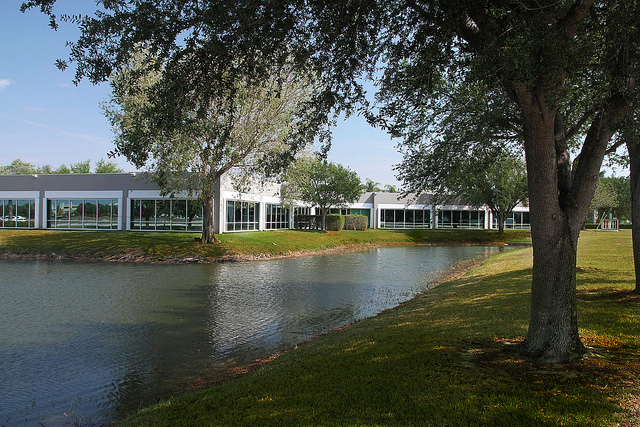
And, the latest law firm to do that is Katzman Garfinkel & Berger with the opening of thier Law & Learning Center in Margate, South Florida.

It’s a 6-acre campus with a new 33,000 square foot facility that includes parking for more than 360 vehicles, a lake, and walking paths.  It houses the firm’s 100-plus attorneys and staff, will become a premier venue for South Florida community association education and outreach, hosts the firm’s Board Member Boot Camp® training seminars, continuing education for managers, Community Forums with legislators and the regular meetings of the Community Advocacy Network's 12-member Advisory Council.


There’s a preview on Flickr.


Katzman Garfinkel & Berger is a specialist in condominium and community association law.

It’s an impressive facility and credit to the law firm.  So, well done strata lawyers (again)!


Francesco …

Sunday, April 17, 2011

These People Should be Certified

Private certification of medium and high rise apartment development has been around for about 12 years in NSW and has copped a lot of criticism.

By privatising government regulation it opened the way for more efficiency and choice but (unfortunately) it also created opportunities for more genuine mistakes, more negligence, the temptation of undue influence and corruption.

But, there are some controls and things affected owners can do.

The Building Professionals Board monitors, regulates and disciplines certifiers and can accept and investigate complaints from anyone.  It has a very comprehensive website that contains the Disciplinary Register and reports summarising selected Complaints & Investigations.

In the latest report a few high rise cases are highlighted.

In one case, the certifier failed to identify that a car park was open deck and did not properly determine the building height, thereby certifying an apartment building which did not have sprinklers in the building and carpark, one fire exit instead of two, no fire control facility, no emergency warning system and no intercommunication system. After action by the Building Professionals Board, the NSW Administrative Decisions Tribunal reprimanded and fined the certifier $15,000.

In another case, a certifier did not properly ensure that fire safety measures were met in an apartment block and certifying tulip style door handles when they should have been single downward action handles.  The certifier argued that he relied on certificates provided by installers and the owner.  Interestingly, the ADT said that “an accredited certifier is expected to be skeptical of the reliability of a certificate presented by a trade supplier or installer as these document may be affected by a lack of detachment and partiality”.  The ADT reprimanded and fined the certifier $5,000.

And, in another case, a certifier did not properly certify two apartment buildings by making errors on separation distances between openings and boundaries, exit door swing directions, exit obstructions, inadequate exit signage and the fire rating of floor coverings.  The ADT decided that this certifier did not properly understand the public responsibility of his role and did not adequately manage certification (relying on others, delegating responsibility and not carrying out inspections). The ADT cancelled the certifiers licence, banned him from reapplying for 2 years, disqualified him from working in a certifiers office for 5 years and fined the certifier $12,000.

And the Disciplinary Register records the following since 2007 –
  • 66 certifiers have been disciplined
  • 32 of those certifiers have had more than one disciplinary actions
  • One certifier has been disciplined 25 times
  • The worst sanction against a certifier was a $15,000 fine and cancellation of their licence 

None of this is good news and it confirms anecdotal views about the (poor) quality of come certifiers.  But, it also demonstrates that complaints can result in action, that the Building Professionals Board is doing something and that the Australian Decisions Tribunal is making decisions that reflect common sense about the certifiers’ role.  

And, maybe some of those ADT decisions will also help civil legal actions by strata corporations against certifiers.


Francesco …

Wednesday, April 13, 2011

Smoke Gets in Your Strata Eyes

Smoking is getting in my strata eyes (and making me cry).

That’s because there’s been a fresh rush of news and debate about smoking in strata buildings (especially in NSW) and some of the comments are a bit hard to believe.

The most recent is an article in the Sydney Morning Herald on 2 April 2011 called

Debate fumes as Sydney Apartments Stub out Smoking.

Despite the sensational nature of recent reports, controls on smoking have been around for a long time and things are pretty clear (and not hazy).

In NSW (at least) things work like this -
  • Strata laws have always prohibited owners from doing things in the common property or a lot that unreasonably interfere with anyone else’s use of the common property or a lot.  That could conceivably include offensive smoking odours or irritating smoke.
  • Strata laws have also always prohibited owners from doing things in their lot that are a ‘nuisance’ to other owner or residents.  Since a legal 'nuisance' includes smoke and smells that always included smoking by-products.
  • Since the NSW District Court decision in Salerno’s Case in 2004 (see Casewatch - Salerno v SP 42724) Courts have consistently upheld the validity of extra no-smoking by-laws and enforced them to stop smoking in common areas and inside lots.  So, there’s been no doubt about the validity of such by-laws.
  • More recently the Consumer Trader & Tenancy Tribunal has been issuing orders to stop disturbing smoking (whether there’s a by-law or not).
None of this is very surprising since it mirrors other laws restricting smoking in public and other places and society’s views of smoking.  So, it's also hard to imagine that a merit based challenge to any new by-laws strata corporation's introduce prohibiting smoking in strata corporations will get very far. 

So, whilst New South Wales Council for Civil Liberties president Cameron Murphy might say about strata corporations that "The next thing is they'll be banning the drinking of coffee", he should realise that they probably legally can (and might).

But (of course) if that happens, even I’ll protest against it.

So, see you on the median strip with your cigarettes.


Francesco …

Tuesday, April 12, 2011

Building Quality Issues make Front Page News

In last week’s Australian Financial Review (7 April 2011) Ben Hurley reported about the perennial issue of the poor quality of high density building construction and defect claims about those buildings in an article called “The Lows of High Rise”.

A variety of strata experts and groups are quoted in the article which makes the following interesting points –
  • Government often fails to include or recognise strata schemes in legal initiatives (like Queensland flood relief)
  • Owners in some larger strata schemes are paying for community infrastructure (like road, street lighting and drains) without getting rate relief
  • Many owners don’t understand the shortcomings of strata ownership
  • Building certification has let strata owners down badly over the last decade
  • Consumer protections for building quality for free standing home owners don’t apply in many buildings over 3 storeys where Home Owners Warranty does not exist
  • Strata schemes are losing more cases (or finding more builders going into liquidation)
  • Strata owners need to co-operate to get good outcomes when building defects occur

All these things are true and worth reminding everyone about.

But, it’s about time the critical issue of building defects makes the front page (and I hope it continues to do so) so that awareness increases and changes are made to improve consumer protections.

I’ve been involved in making defect claims for a long time and seen owner’s rights get watered down and eroded.  It’s wrong and I’m committed to trying to improve  outcomes on building quality issues for owners.

After all, when people spend hundreds of thousands of dollars (or more) for a new apartment they are entitled to expect and get a properly constructed building, for the building to comply with all building controls and standards and to be able to use their apartment in comfort, safety and securely.

So, see you in your defect free apartment and strata scheme soon.


Francesco … 

Tuesday, April 5, 2011

NSW Strata Disputes go Online


Despite all the criticisms of the NSW Consumer Trader & Tenancy Tribunal they have now entered the web era by going on line.

Since early 2011 parties to some disputes in the CTTT can lodge applications and documents relating to applications online by using the new portal site.

Forms can be completed at PDF documents, attachments uploaded and payments made by Mastercard, Visa, Bankcard, American Express and Diners Club.

The CTTT says that "CTTT Online allows you to lodge an application to commence proceedings at the CTTT. Where possible, an automatic hearing notice will be generated informing you of the hearing date, time and venue". 

But, don't get too excited because applications for Strata & Community Schemes, Commercial and Retirement Village applications cannot be lodged online and you have to use the old fashioned ways.

That's a real shame and rather inexplicable since it would be far better (and about time) strata owners, executives, managers and others (like retirees) can do things at the CTTT without standing in a queue.

Welcome to the future present.


Francesco …

Sunday, March 27, 2011

That’s Not a Strata Scheme … According to the NSW Planning Court

In Hillsdale, Sydney there’s a 30 year old block of apartments and house on a large (5636 sqm) block of land which is ripe for redevelopment.

Although the Botany Bay City Council approved development of the site in 2009 into a new 76 apartment complex with basement parking, the owner applied for approval of a smaller scale development. 

The new development involved upgrading the existing building, splitting the house into two dwellings, re-organising the car park to create 34 resident parking spaces and 4 visitors spaces, and a variety of associated building improvements.  This development would increase the site density from 33 dwellings to 34 and add 6 car parking spaces.

But, the Council would not approve it.  Arguing that to allow redevelopment of the site into only 34 dwellings when it could be 76 preserved an obsolete building, prevented it from achieving it’s strategic plans for higher density in that area and (as a strata scheme) it restricted the opportunities for future development of the site.

The Court agreed saying that the strata subdivision into 34 strata lots will virtually permanently remove the site from prospects of redevelopment and that development was both inconsistent and antipathetic to the requirements of the Environmental Planning and Assessment Act (NSW) 1979 in relation to “the orderly and economic use and development of land”.

It’s also an interesting case because unusually the Council wanted more development on the site than the owner.

This case reference is Marana Developments v Botany Bay City Council [2010] NSWLEC 1237 decided by the NSW Land & Environment Court, 3 September 2010 and you can find it here.

I’ve also prepared another Casewatch on this important decision which you can read at my professional website here.  Casewatch is an easy to understand summary of the more important strata cases in Australia.


Francesco …