Showing posts with label usa. Show all posts

Tuesday, September 20, 2011

High Density Means High Employment

I’ve just read a great editorial by Ryan Avent in the New York Times called ‘One Path to Better Jobs: More Density in Cities’

Ryan defines the things that make a city a city and a not-city a not-city is the fact that a city is dense and a not-city isn’t.  And, he argues that when it comes to economic growth and the creation of jobs, the denser the city the better and that density brings many benefits.
Economists studying cities routinely find that after controlling for other variables, workers in denser places earn higher wages and are more productive. Some studies suggest that doubling density raises productivity from between 6 and 28 percent and other economists have concluded that more than half the variation in output per worker across the United States can be explained by density alone.

I’ve always thought that higher density (compared to suburban sprawl) is good for the economic viability of cities and here’s some more support for that proposition.  So, there’s another reason why strata and community title development, ownership and living is a good thing.

Ryan Avent is also the author of the Kindle Single “The Gated City” from which his editorial was adapted.


Francesco …. 

Thursday, September 15, 2011

Miami Manager’s Half Million Dollar Fraud

The Miami Herald has reported a sorry story of fraud by Lourdes Rodriguez, 48, the former general manager of the Atlantic II.

She’s been charged with grand theft and organized fraud by Aventura police who have accused him of taking nearly $500,000 from the condo association. 

In February 2010 auditors alerted the association that Rodriguez had been receiving a salary higher than approved which led to a specialist accounting firm analyzing the condominium association’s account. They discovered about $506,956 taken from the association between January 2007 to February 2010.

Rodriguez blamed her actions on a gambling addiction in an e-mail to residents and vowed to repay the association 'no matter how long it may take.'

The association has recouped about $400,000 from its insurance company.

It’s a real concern for all strata corporations since it’s so easy for dishonest people to access money and only careful financial controls (including regular detailed audits and checking) can discover and deal with it.


Francesco …

Monday, September 12, 2011

Twin Towers of Light in NYC

I can't let such an important anniversary as 10 years after the attack on NYC's Twin Towers on 9 September 2001 go by without a comment.


And, despite all the horror, tragedy and destruction that it caused, it's good to see Americans rebuilding themselves and that part of their city.  So, here's an amazing and moving display that's been lighting up the New York skyline for the last 2 nights.


Called the World Trade Center Twin Towers Tribute In Light, the light beams are made up of 88 light bulbs that are 7,000 watts each, which when illuminated are visible up to 60 miles away. 


They echo the original buildings and do a lot more; helping us all get past the terrible memories we have.


Francesco ...

Friday, September 9, 2011

The Street Aesthetics in New York City

Here's some more of New York City.

It's a great short video called 'The Street Aesthetic of New York City' shot by Christian Andersen.

Christian’s describes the video as 'I had a chance to go visit one of the greatest cities this summer. Right when I got of the plane and arrived downtown New York, I took my camera and strolled out through the busy streets of New York City. I wanted to capture the great culture and street aesthetic of New York and I think it turned out really well. The video includes recordings from both Manhattan and Brooklyn, where I spend hours capturing the culture and everyday life of native New Yorker.'

The Street Aesthetic of New York City from Christian Andersen on Vimeo.


Well done Christian and enjoy!


Francesco …

Friday, September 2, 2011

Graffiti Becomes More Socially Complex (and Important)

Graffiti has many dimensions (good and bad) and there are polarised opinions about it.  But regardless of your view, graffiti is becoming becoming more varied and complex in cities around the world.  And as life in urban areas comes under increasing scrutiny and analysis so does the graffiti that appears in those locations.

This recent article by Sosseh Valentine Taimoorian on the Sustainable Cities Collective website is a great example of this analysis.  It considers a few of the newer graffiti artists that have emerged and discusses how their intentions and actions affect society in positive ways.

It’s a fascinating piece and, also, highlights some great street art.

And, this article in the New York Times, Adam Magourney argues that the surge in US graffiti is more about pop culture than ever before and is causing financial hardship for municipalities in tough economic times.

Francesco …

Monday, May 30, 2011

Florida’s 2011 Strata Law Reforms


Florida is a place known for oranges, alligators, NASA and, of course, condominiums.  So, strata laws are very important there to many many Floridians.  And, they are always being changed.


Proposals for law reform are tracked and summarised by the Community Association Leadership Lobby (CALL).  Here's their summaries.

SB 530/HB 1035:  This is the bill partially drafted by the CALL team.  If it becomes law it will:

  • Enable owners to review employment agreements and see financial records that show compensation paid to employees.
  • Clarify that owners may allow the association to publish a directory or other document with their phone numbers, email addresses and other contact information. 
  • Allow condo boards to hold closed meetings to discuss personnel matters, without an attorney being present, just like homeowners’ association boards. 
  • Enable condos and HOAs to pass management collection fees on to the delinquent owner.
  • Make it perfectly clear that all rent shall be paid to the association until a unit owner's delinquency is paid in full.
  • Clarify the procedure to suspend use and voting rights (when an owner is delinquent for more than 90 days), as well as some other issues.
SB 328/HB 59:  Specifically permitting process servers in to common areas of condominiums, gated communities, or any secured residential areas without notice when serving a summons or other process.

SB 332/HB 173:  Equalizing treatment of multi-family (i.e. condominiums) and single family residences with respect to submerged land leases. Currently, multi-family residences are treated like commercial, profit-making entities.

SB 476/HB 883:  Addressing public lodging establishments. Chapter 509 creates two classes:1) transient (allows rentals more than three times per year for periods of a month or less); and 2) non transient (rentals for a month or more). This bill raises the transient/non transient threshold from one month to six months.

SB 646:  Requiring a mobile home park owner to notify the officers of the homeowners’ association created by ss. 723.075-723.079 of a bona fide offer for purchase.

SB 650/HB 423:  Allowing local governments to enforce violations of certain mobile home statutes and requiring notice before a park owner can evict a mobile home owner because of a change in land use.

SB 712:  Making is perfectly clear that condo boards can suspend use of recreational facilities, meeting rooms, gyms, pools, cable television, internet service and valet service when an owner is more than 90 days delinquent.

SB 832/HB 583:  Requiring the Division to notify a mobile home homeowners’ association before approving changes to the prospectus or offering circular.  Prospective tenants will receive a “mobile home expense disclosure document.”  The bill also defines the “market area or competitive area” for comparable mobile home parks.

SB 1112:  Requiring condo and coop boards to provide the local property appraiser with a list of units rented during the previous year, so the property appraiser can investigate possible violations of homestead laws.

SB 1132:  Prohibiting immediate family members in the same unit from serving on the board of a cooperative association together.

SB1288/HB 799:  Adopting a non-judicial foreclosure process for commercial property, including commercial condos.


SB 1516/HB 1195:  For both condominiums and home owner associations, this bill will - 
  • Require insurance companies to notify all owners (by certified and regular mail) if the board cancels or does not renew its required insurance coverage (50 units or less) and enable a majority of the voting interests to direct the board to obtain substitute coverage.
  • Provides that associations may install impact glass or other code-compliant windows in certain circumstances. 
  • Specify that rent paid to the association by tenants will apply to outstanding and future monetary obligations. 
  • Relieve the association from joint and several liability when it takes title to a property by foreclosure or deed in lieu thereof.
  • Give HOA owners the right to speak at board meetings on any agenda item (for at least 3 minutes) without a special petition.
  • Require “condo-style” elections for homeowners’ associations (60-day notice, written self-nominations, second notice, two-envelopes, secret ballots, etc.).
  • Prohibit co-owners in an HOA from serving as board members together unless they own more than one parcel or unless there are not enough eligible candidates to fill the vacancies on the board.
  • Specify that anyone more than 90 days delinquent is not eligible for board membership.
  • Prohibits convicted felons from serving on the HOA board unless their civil rights have been restored for at least 5 years as of the date on which such person seeks election to the board.
You can also follow these law changes at the Florida Condo and HOA Law Blog too.

See you in Miami's strataland soon.


Francesco …

Thursday, May 26, 2011

US Law Firm Develops Strata Building


Sometimes strata law firms set great examples for everyone else.

It happens when they back themselves with investments in people, innovation, education, buildings and other resources.

And, the latest law firm to do that is Katzman Garfinkel & Berger with the opening of thier Law & Learning Center in Margate, South Florida.

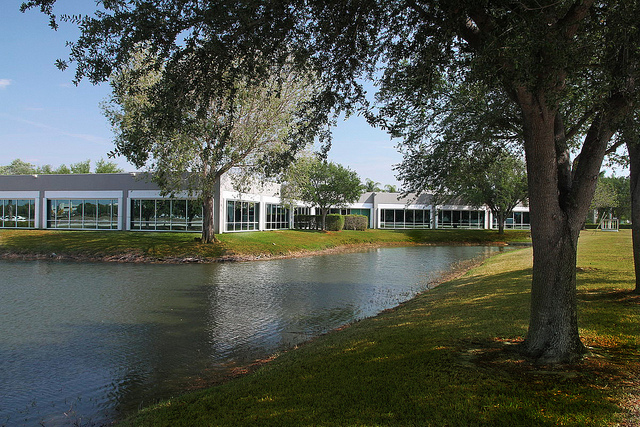
It’s a 6-acre campus with a new 33,000 square foot facility that includes parking for more than 360 vehicles, a lake, and walking paths.  It houses the firm’s 100-plus attorneys and staff, will become a premier venue for South Florida community association education and outreach, hosts the firm’s Board Member Boot Camp® training seminars, continuing education for managers, Community Forums with legislators and the regular meetings of the Community Advocacy Network's 12-member Advisory Council.


There’s a preview on Flickr.


Katzman Garfinkel & Berger is a specialist in condominium and community association law.

It’s an impressive facility and credit to the law firm.  So, well done strata lawyers (again)!


Francesco …

Monday, March 21, 2011

What do Fanny’s have to with US Strata ?

I was reading about US strata corporations losing Fannie Mae and Fannie Mac approval and wondered why it was a big deal.  So, I investigated it more and found out some fascinating things about the drivers of the medium and high density real estate sector in the US.

The story goes something like this.  And, sorry, it’s a long story.

In the USA the residential real estate mortgage market works a bit differently to Australia.  Apart from the mainstream banks who provide mortgage finance there are organisations like Fannie Mae and Fredie Mac that sit behind banks and underpin residential mortgages.


GSE's Explained

So, what’s a Fannie Mae or a Freddie Mac?

Fannie Mae and Freddie Mac are government-sponsored enterprises with a mission to provide liquidity, stability and affordability to the US housing and mortgage markets and to increase the amount of funds available in order to make homeownership and rental housing more available and affordable. Fannie Mae and Freddie Mac work with mortgage bankers, brokers and other primary mortgage market partners to help ensure they have funds to lend to home buyers at affordable rates.  These kinds of loans have low rates and very low down payment requirements (usually 3%) and the government guarantees those loans so the lender is protected in the event of default.

Fannie Mae, Freddie Mac and other GSEs (government sponsored enterprises) buy loans from lenders – allowing the lender to offer a low interest rate since it sells the loan (and the risk) to one of these entities.

The Federal Housing Financing Agency (FHFA) is a government agency created to regulate and oversee GSEs like Fannie Mae and Fannie Mac and to make sure the GSEs operate in a "safe and sound manner".  So it reviews business practices of the GSEs and effectively sets the parameters for mortgage lending.

So when someone wants a Fannie Mae or Freddie Mac backed mortgage in a condominium or community association the condominium or community association operations must satisfy the FHFA requirements … otherwise there’s no loan at these lower rates and favourable terms.


Approval Guidelines

These requirements are detailed and complex and include things like –
  • there are two or more units
  • the project is 100 percent complete
  • construction has been finished for at least one year
  • 100 percent of the units have been sold
  • no one owns more than 10 percent of the units
  • the budget funding replacement reserves for capital expenditures and deferred maintenance (at 10%)
  • home owners are in control of the association
  • at least 50 percent of owners occupy the property
  • there’s adequate hazard and liability insurance (including flood and fidelity insurance where necessary)
  • less than 25 percent of the total floor area in a project is for commercial purposes
  • the commercial portion of the project must homogenise with residential use
  • less than 15 percent of unit owners fee payments are in arrears 
  • only 30% to 50%, of the units can be funded under FHFA approved lenders (with exceptions available)
  • there must be a satisfactory independent budget review establishing that the budget:
   - is adequate,
   - includes allocations to ensure sufficient funds to maintain and preserve all amenities and features of the project
   - provides for funding of replacement reserves for capital expenditures and deferred maintenance at least 10% of the budget
   - provides adequate funding for insurance coverage and deductibles

In some cases a reserve study may also be required.

And, FHFA approvals expire after a period of time so also need renewal.


Unsurprisingly, many of the current operational and management practices in US condominium and community association exist to satisfy FHFA approval, rather than because of legislative requirements or simple market forces between managers and owners.


Current Issues & Developments

In the past strata corporations viewed FHFA financing negatively.  But declining real estate values and the banking crisis has eliminated many options from conventional lenders who will not finance properties if the loan is not acceptable to the secondary market (Fannie Mae, Freddie Mac and the like).

So today, Fannie Mae or Freddie Mac approval may bring more buyers for units  
because financing will be more readily available. Additionally, the increased marketability of those units currently for sale in a Fannie Mae or Freddie Mac approved project not only helps the current sellers, but also serves to increase the value of all units in the condominium. This will not only help owners currently looking to sell or refinance, but will also help those unit owners who may wish to sell or refinance their units in the future.

The November 2009 guidelines temporarily increased the number of permitted FHA insured loans in a particular project from 30% to 50%.  100% of the loans can be FHA insured if the project meets all of the basic condominium standards and the additional items. 

Fannie Mae recently auctioned close to 100 South Florida properties.  Those properties were only offered to owner-occupants (individuals and families who plan to live in the homes), not investors, in an effort to stabilize neighborhoods severely impacted by foreclosures.

There are some obvious benefits to GSE financing and some obvious detriments.  One benefit is flexibility - government backing allows Fannie Mae to offer hardship relief to home/unit owners.  For example, Fannie has the ability to offer loan forbearance to mortgagors plagued with chinese drywall (allowing them to skip 6 months principal payments so owners can catch up other financial obligations.

See you at the next Fannie Mae mortgagee sale.


Francesco …

Sunday, March 20, 2011

Arrr … What Makes a Neighbourhood?

Neighbourhoods are communities where people interact and share things in close proximity that enrich each others’ lives.

But, as the world get’s busier and we become more disconnected this happens less (and less).

However, social media is filling the gaps fast.  I’m not talking about Facebook, Foursquare, Twitter, Mozilla or that kind of application.  There are all sorts of even more edgy and far more local facilities like Neighbourhoodr.

Neighborhoodr is a local neighborhood blog network where anyone can quickly and easily post about what's happening in their neighborhood without having to log in or register. It’s already available in the following cities in the USA and around the world.


Some of the US cities where it's operating include Austin
, Baltimore, 
Boston, 
Charlotte,
 Chicago
, Columbus
, Dallas, 
Denver
, Detroit, 
El Paso, 
Fort Worth, 
Houston, 
Indianapolis
, Jacksonville, 
Los Angeles, 
Memphis, 
Nashville, 
New York
, Philadelphia, 
Phoenix, 
San Antonio
, San Diego
, San Francisco
, San Jose
, and Seattle.  And, internationally it's operating in Barcelona, Berlin, Hong Kong, London, Paris, Rome, Singapore, Toronto and Vancouver

Neighborhoodr says that over time, cities will have their individual neighborhoods represented, as the demand for that neighborhood presents itself.  And, that if they receive or see enough content from any particular neighborhood, they’ll launch a neighborhood page devoted to that hood.

For instance in New York there are already more than 50 neighborhoods.

This is an example of how larger strata building complex can create a resident, owner and neighbour contact space.  And, even smaller strata buildings could create a similar community with neighbouring buildings on or near their block.

So, why not explore and try to create your own strata neighbourhoodr?

Francesco …   

Friday, March 18, 2011

Buildings that Reflect what Happens Inside

The Kansas City Public Library


Sometimes even the best designed buildings are a bit boring.  But what if the outside of  buildings revealed what was going on inside?
I got the idea from this photo of the carpark of the Kansas City Public Library that's partially concealed by the a wall of giant book spines. 
It's a striking feature of Kansas CIty's downtown, running along the library carpark on 10th Street.  The book spines are 25 feet high and 9 feet wide and show 22 titles suggested by library members.
It's pretty cool.
What if the outside of other buildings reflected what went on inside like -
  • Office buildings that look like computers, filing cabinets, and stationery
  • Banks that look like vaults, banknotes and coins
  • Restaurants that look like stacks of plates, glasses, napkins and cutlery
  • Mechanics workshops that look like car parts


Francesco ...

Wednesday, March 9, 2011

Go ... and Get Urbanised

The design of cities is a serious business for planners.  And, it make a difference to everyone who lives and works in them.

So, it's always interesting when someone popularises the issues and makes them accessible to us.

Urbanized is a new documentary by Gary Hustwit currently in production about the design of cities. 

Urbanized looks at the issues and strategies behind urban design, featuring some of the world’s foremost architects, planners, policymakers, builders, and thinkers. Gary's been traveling around the world interviewing people and filming specific urban design projects that represent the issues facing cities today. 

And, Gary has set up a Kickstarter project to help raise funds to complete the film.

Check it out and watch out for the finished documentary.


Francesco …

Thursday, March 3, 2011

Vote 1 for Me … Woof !!


We’ve heard a lot about what it takes to be a strata committee member. 

It’s a thankless job for a volunteer who needs to learn all about the building, how strata runs and devote their private time for their neighbours.  So, it’s hard to get people to volunteer for the job.

In many ways it’s a job that requires loyalty and devotion that’s more suitable for a dog than a person.

So, it’s no surprise that they’ve finally elected a dog to a strata committee.

As this very funny story in the Washington Post reports. Beatha Lee was elected president of the Hillbrook-Tall Oaks Civic Association in Annandale, Virginia unanimously by the 50 people at the annual meeting.  Beatha was described as “a relatively new resident, interested in neighborhood activities and the outdoors, and who had experience in Maine overseeing an estate of 26 acres”.  And, since it’s always hard to get anyone to volunteer to devote the time needed to serve as an officer, she was an obvious choice.

Only weeks later did owners discover that their new president was, in fact, a dog when she promised in the association newsletter to "govern with an even paw" alongside the dog's photo under the heading, "Dog Rules, Humans Apathetic (Pathetic)".

In fact, Beatha Lee is a shaggy, dirty-white wheaten terrier.  

And, here she is ...


As it turns out, Beatha is actually the pet of the former president, Mark Crawford, who inherited Beatha in 2008 from his mother and stepfather in Maine.  Mark Crawford had served three consecutive terms as president and could not run for the office again. After weeks leading up to the election, he begged, pleaded and cajoled neighbors to run for the often-thankless volunteer post. No one bit. Newer, younger families told him that they were too busy juggling work, long commutes and kids. And long-time residents, were burned out.
So, he decided to nominate his dog … to motivate owners to participate.

You can read the whole article here.

It’s not clear if the strategy worked but the article suggests that the association is running fine with it’s new president.

Maybe it’s better to have dogs than people on strata committees?

See you at the pound looking for nominations for next year.


Francesco …